APRIL 24, 2017
Twelve years ago the Bard Music Festival decided that our featured composer each summer should be given a first name. While Brahms and His World had sufficed for the 1990 inaugural season, 25 years later it was Franz Schubert and His World for the annual book of essays published by Princeton University Press. Neither composer needs much introduction. (Richard Strauss was given his full name in 1992 so as to eliminate any doubt—we have yet to tackle Johann Strauss Jr.)
This year we have to make a call that in various ways captures much at the heart of the 2017 Bard Music Festival: should we say Fryderyk or Frédéric Chopin? The question is not only politically weighted between Poland and France but also revealing about how the program committee makes fundamental decisions about the unfolding of the festival.
Every year poses challenges, and one challenge this time is how to represent the almost exact split in Chopin’s life: his first 20 years spent in Poland, the remaining 19 mainly in Paris. And even this neat chronological divide is more complicated than it first appears. His father was French, and Chopin was raised imbibing French culture and exposed to the language. Once he moved to Paris, he became deeply involved with a vibrant diaspora, had Polish patrons, students, friends, and even a roommate; Chopin probably spoke Polish almost daily. His letters home also reflect the divide: he wrote in Polish to his father, who responded in French.
As we finalize the plans for this summer we want to represent both of these worlds and much more, while also considering the intriguing implications. We no doubt think too easily of Chopin as the 19th-century artistic emblem of Poland. His life, loyalties, and legacy were far more complex, cosmopolitan, and interesting. While he was the grateful beneficiary of an elite education in Warsaw, his most commanding musical models from the start were leading foreign composers, past and contemporary. Chopin longed to travel. After a brief and somewhat disappointing trip at age 18 to Berlin, he made his way to Vienna, the “music city” that captivated him and where he was immediately embraced by the preeminent musical figures. (Schubert had died just eight months earlier, precluding what might have been a fascinating connection.) In Vienna, Chopin discovered the considerable appeal that his Polish exoticism had with foreign audiences, as well as the contempt in which his country was sometimes held: “In Polen ist nichts zu holen” (roughly, “There’s nothing to be done with Poland”) was a phrase he overheard, to his chagrin and resentment.
Russia crushed Poland in late 1830, during Chopin’s second trip to Vienna. He felt he could not return home, and so pressed forward to Paris, never to see his native country again. Much of Chopin’s music continued exhibiting a deeply rooted connection to Poland. Many of his teenage pieces written in Warsaw drew upon Polish songs and dances; he would now export this music across Europe. Robert Schumann, his earliest, most ardent, and most powerful critical advocate, stated that if Tsar Nicholas I, who had done the crushing of Poland, “knew what a dangerous enemy threatened him in Chopin’s works, he would forbid this music. Chopin’s works are guns buried in flowers.”
While exposing his own “ethnocentric” point of view—the undeniable centrality of German music—Schumann raised the crucial issue of nationalism that must have haunted Chopin as well. Chopin found astonishing ways in his compositions to combine Slavic exoticism with Bachian counterpoint, Beethovenian boldness, Schubertian inwardness, Lisztian virtuosity, and Bellinian lyricism. How his music relates to Poland, to Paris, to the domestic music making of the salon, to the tradition he inherited, and to the legacy he passed on—well, these are exactly the issues we will explore with this summer’s programming.
One of our main challenges, however, will be to do justice to Chopin’s dual identity: beginning with his formidable training in Warsaw, the youthful influences, relations with Polish culture and politics while in Paris, and his legacy across Europe. The young Chopin was molded by a broad European musical scene. Benefiting from the advice of this year’s scholars in residence, Jonathan Bellman and Halina Goldberg, we are programming concertos that Chopin either played himself or admired, especially piano concertos. These pieces provide missing links between the Beethoven concertos we know, Chopin’s own teenage efforts, and the later, more symphonic ones by Liszt, Brahms, and Rachmaninoff. Concertos by Johann Nepomuk Hummel, Friedrich Kalkbrenner (to whom Chopin dedicated his E-Minor Concerto), Ferdinand Ries, and Ignaz Moscheles are especially revealing.
The great cultural critic Walter Benjamin called Paris the “capital of the nineteenth century.” Chopin spent his entire adult life in the city and got to know many of its luminaries, not just the greatest musicians but also cultural figures such as Eugène Delacroix, Balzac, Heinrich Heine, and Victor Hugo. His long, fascinating, and fraught relationship with Aurore Dupin, better known as George Sand, brought him in touch with other leading personalities. The festival ends by pairing Chopin with the preeminent French composer and critic of the day, Hector Berlioz, and his dramatic symphony Roméo et Juliette.
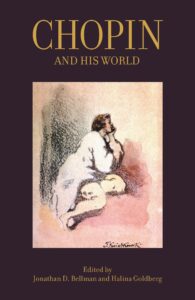
I confess to a longstanding fascination with composers’ deaths, burials, monuments, and memorials. In Chopin’s case, the circumstances around his death are revealing about the issues of identity signaled by the two versions of his first name. He died at age 39 in his Paris apartment surrounded by friends and family. The funeral at the Madeleine was attended by thousands of mourners and Mozart’s Requiem was sung. He was buried in the Père-Lachaise cemetery. Before the burial, however, his heart was removed for his sister to take back “home” to Warsaw, and later some soil from “home” was brought to Paris to be placed on his grave. What a perfect metaphor for his divided life: Frédéric Chopin is buried in Paris, but Fryderyk’s heart remains in Poland. “Chopin and His World,” as our festival will inevitably be called, will open on August 11.
Author