Fisher Center and Bard College Center for Indigenous Studies
Julia Keefe Indigenous Big Band
November 1, 2025
Fisher Center and Bard College Center for Indigenous Studies
November 1, 2025
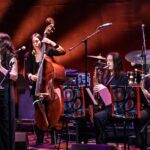
“Jazz is a uniquely American art form. The Julia Keefe Indigenous Big Band… takes that one step further.” —Olympian
Celebrate the start of Native American Heritage Month with the Julia Keefe Indigenous Big Band—a powerhouse ensemble of Native and Indigenous jazz musicians from across Indian Country.
Performing pieces from their under-appreciated predecessors in jazz, alongside works by contemporary Indigenous composers, the band spotlights a vibrant, long-standing tradition of Indigenous improvised music today.
Saturday, November 1 at 5:30 pm
Sosnoff Theater
Join us before the performance for complimentary seasonal bites by Chef Taelor Barton (Cherokee Nation) and explore a makers’ market, featuring local and Indigenous jewelry as well as other wares, information about local community organizations and Bard’s affiliated programs, and more.
The Julia Keefe Indigenous Big Band (JKIBB) is an ensemble of Native and Indigenous jazz musicians from across Indian Country. Performing pieces from their under-appreciated predecessors in jazz, like Mildred Bailey (Coeur d’Alene) and Jim Pepper (Kaw/Mvskoke), alongside works by contemporary Indigenous composers, the band spotlights a vibrant, long-standing tradition of Indigenous improvised music today.
Led by the celebrated vocalist and luminary Julia Keefe (Nez Perce), the ensemble brings charisma, passion, and purpose to every stage, leaving audiences both inspired and educated. Premiering at the Washington Center for the Performing Arts in 2022, the band quickly gained a reputation for deepening and challenging our understanding of the “uniquely American” art form known as jazz. JKIBB features a ‘who’s who’ of Indigenous bandleaders today and has headlined marquee events, including the Mary Lou Williams Jazz Festival at the Kennedy Center in Washington, D.C., in the spring of 2024.
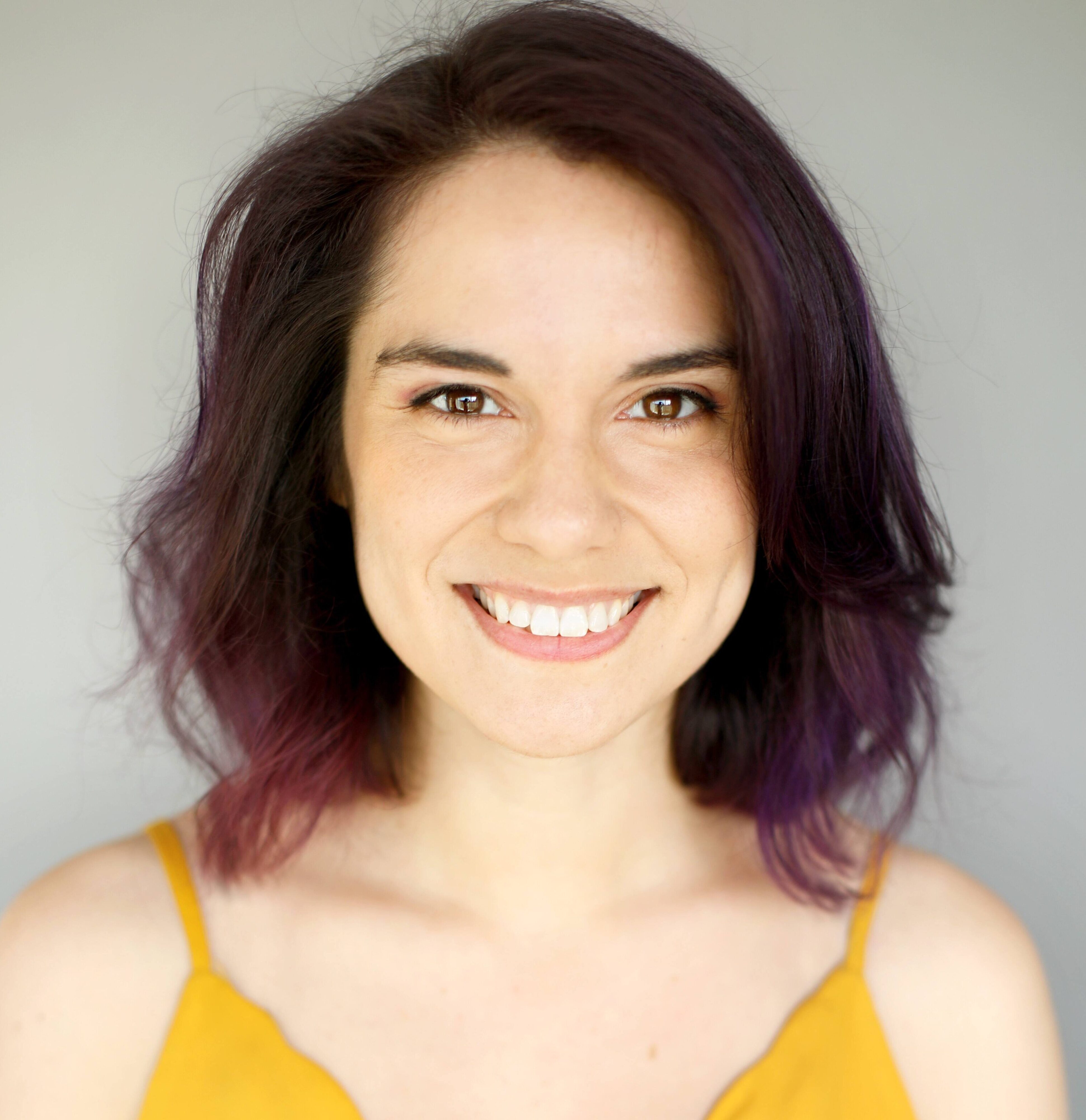
“[Julia] gives me hope for the future of jazz.” —Judy Carmichael, NPR Jazz Inspired
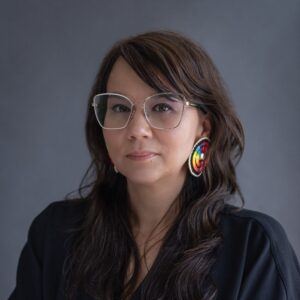
Julia Keefe (Nez Perce) is an internationally acclaimed Native American jazz vocalist, actor, activist, and educator currently based in New York City. Her professional career has spanned over 18 years, and she has headlined marquee events at the Smithsonian Museum in Washington, D.C., NMAI-NY, as well as opened for the likes of 20-time GRAMMY Award winner Tony Bennett and 4-time GRAMMY Award winner Esperanza Spalding. Her life’s work is the revival and honoring of the legendary Coeur d’Alene jazz musician Mildred Bailey, and she is leading the campaign for Bailey’s induction into the Jazz Hall of Fame at Lincoln Center.
Julia grew up in Kamiah, ID, on her Tribe’s reservation before moving to Spokane, WA. It was in Spokane that she began studying music and competing at the Lionel Hampton Jazz Festival each year. In 2007, she won Outstanding Vocal Soloist in the alto division at the festival. She earned her bachelor’s in music from the University of Miami’s Frost School of Music in 2012, graduating with honors. She taught jazz voice at Gonzaga University and was a guest clinician at North Idaho College and the Lionel Hampton Jazz Festival before deciding to relocate to New York City. She earned her master’s in music from Manhattan School of Music in 2019, under the tutelage of Theo Bleckmann, Kate McGarry, Jo Lawry, Stefon Harris, Dave Liebman, and Phil Markowitz.
Julia also has a passion for Indigenous film and was a featured artist in Sterlin Harjo’s critically acclaimed documentary, Love and Fury. Her first feature film, Virginia Minnesota, was the closing feature at the Catalina Film Festival in 2018. She is the Executive Director of the Board for One Heart Native Arts and Film Festival, an annual non-profit festival in Spokane, showcasing the diversity and vitality of contemporary Native art in the Pacific Northwest and beyond.
Julia’s recent recording, Nobody Else But Me, was released to glowing reviews. In addition to rehearsing for an upcoming album, she is currently directing the Julia Keefe Indigenous Big Band, a new project highlighting the history and future of Indigenous people in jazz, and the Mildred Bailey Project will be released in winter 2023. Julia has performed with world-class musicians, including Jim McNeely, Emmet Cohen, Billy Test, Dan Hearle, Andreas Oberg, Bob Bowman, Clipper Anderson, Jack Mouse, and the Lionel Hampton Big Band, among many others.
Indigenous jazz musicians, ensembles, and big bands have their place in the contemporary jazz world and jazz history. Following 19th-century federal policies to remove Indian children from their homes and indoctrinate them into European culture (Indian Boarding Schools), small ensembles and big bands began to flourish on reservations across the US and Canada in the first half of the 20th century. Indigenous musicians started to ascend to celebrity with jazz as their medium—including Russell “Big Chief” Moore, Mildred Bailey, Oscar Pettiford, and Jim Pepper—but were never duly credited as Indigenous visionaries in the genre.
From time immemorial, songs have been the vessels of stories and lessons for the Indigenous people of the Americas. The goals of the Julia Keefe Indigenous Big Band are to celebrate and continue that tradition, to compose and perform new music inspired by traditional backgrounds, and to create a community of like-minded peoples from all backgrounds to uplift the next generation of Indigenous jazz musicians.
Indigenous cultures are not monolithic; many cultures carry traditions and songs as old and sacred as the next. The Julia Keefe Indigenous Big Band reflects a wide range of Indigenous identities, from South America to Canada, Northeast to Southwest. Together, we represent a long-silenced, long-forgotten chapter of jazz history: the participation, contribution, innovation, and legacy of Indigenous jazz musicians. A legacy that seasoned composers and arrangers Julia Keefe and co-founder Delbert Anderson (Diné) carry forward through original works inspired by songs and rhythms of their Native heritage, reimagined through the language and stylings of jazz.
It is a rarity to see a single Indigenous jazz musician nowadays, let alone sixteen, on stage. The Julia Keefe Indigenous Big Band celebrates the diversity and vitality of Indigenous peoples in jazz: past, present, and future. It is the bridge for people everywhere to see themselves on the bandstand regardless of race, ethnicity, age, gender, or socio-economic status.
The JKIBB premiered at the Washington Center for the Performing Arts in May 2022. The premiere performance was made possible with the support of Jazz Road, a national initiative of South Arts, funded by the Doris Duke Charitable Foundation with additional support from The Andrew W. Mellon Foundation.
Himacus Qeci’Yew’Yew (Thank you so much) for your support of Indigenous artists.
Nearby villages and towns in the Hudson Valley boast a large selection of restaurants, as well as a variety of hotels, motels, inns, and bed & breakfasts.
Bard College’s main campus is located in Annandale-on-Hudson (a hamlet of Red Hook), New York, on the east bank of the Hudson River, about 90 miles north of New York City and 220 miles southwest of Boston. The Taconic State Parkway and the New York State Thruway provide the most direct routes to our campus. Click the Google map below, or get directions by entering the following address into your GPS: 60 Manor Avenue, Red Hook, NY 12571.
From the East
If you are traveling from east of the Hudson River in New York State, take the Taconic State Parkway to the Red Hook / Route 199 exit, drive west on Route 199 through the village of Red Hook to Route 9G, turn right onto Route 9G, drive north 1.9 miles, turn left onto Annandale Road, then turn right onto Manor Ave.
From the West
If you are traveling from west of the Hudson River, take the New York State Thruway (I-87) to exit 19 (Kingston), take Route 209 (changes to Route 199 at the Hudson River) over the Kingston-Rhinecliff Bridge to Route 9G, turn left onto Route 9G, drive north 3.5 miles, turn left onto Annandale Road, then turn right onto Manor Ave.
Sosnoff Theater
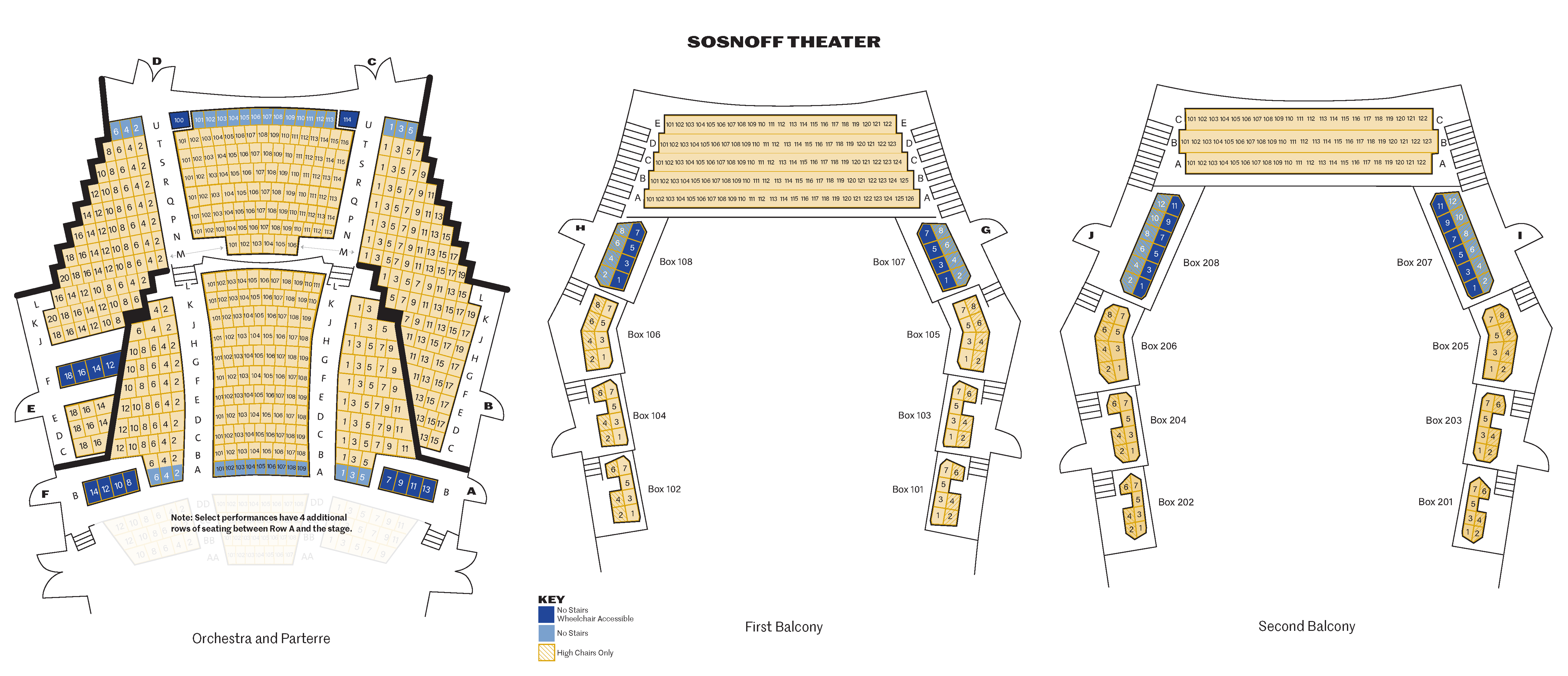
Accessible Seating
Wheelchair-accessible seating is available in all seating areas for patrons in wheelchairs and their companions. There is an elevator to all levels of the Sosnoff Theater and a wheelchair lift is used to access front-row wheelchair seating.
Wheelchair-Accessible Restrooms
Restrooms at all locations are wheelchair accessible. Single-use restrooms are available at most locations.
All-Gender Restrooms
Bard College and the Fisher Center support guests of any gender identity/expression in using the restroom of their choice. Additionally, all-gender restrooms are available at all venues.
Find answers to some of the most common questions patrons have regarding our venues and performances. If you have a question not answered in our FAQs, please call 845-758-7900 or email [email protected] during regular Box Office hours.
Our “Know Before You Go” guide answers all of your pre-show accessibility and navigation questions for your next performance at the Fisher Center!