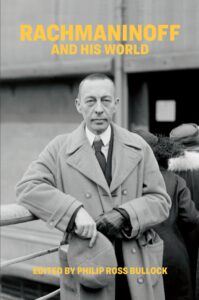
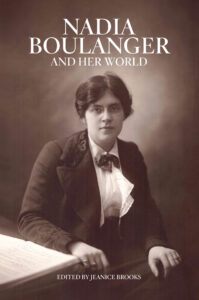
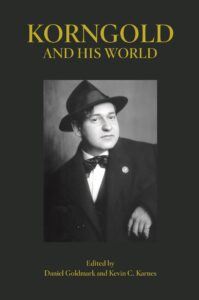
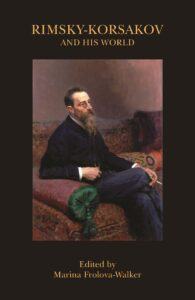
Stravinsky and His World

August 9–11 and August 16–18, 2013

Weekend One
Becoming Stravinsky: From St. Petersburg to Paris
August 9–11

Weekend Two
Stravinsky Reinvented: From Paris to Los Angeles
August 16–18


When Igor Stravinsky died in 1971 at the age of almost 90, he was the world’s most famous composer and the most influential figure in 20th-century music—indeed the last classical music composer to make history of any kind. Who was this charismatic and complex composer? What is his legacy? How do we reconcile his compositions with the extensive body of commentary about music and culture he left behind, much of it written with Robert Craft, his long-time associate during his American years?

Stravinsky began his career his native Russia in the circle of Nicolai Rimsky-Korsakov but rapidly catapulted himself to international notoriety, inspired by the revival of interest in Russian folklore traditions, contact with new French music, and the collaboration with key artists in Sergei Diaghilev’s circle. In the 1920s and 1930s, living in exile in Switzerland and France, Stravinsky pursued a self-consciously “classical” musical aesthetic that rejected late Romantic premises regarding expressiveness and favored linearity and clarity, marked by great rhythmic invention and an uncanny ear for sonority.

In 1939 Stravinsky came to the United States, where he remained until his death. He exerted a profound influence on American musical life, especially after delivering his Norton lectures at Harvard, published as The Poetics of Music. But he also took another turn in his own work, ultimately adapting serial techniques pioneered by Arnold Schoenberg. In his American years, Stravinsky produced a wide array of masterpieces, from symphonies and ballet scores to religious works, including the Requiem Canticles, his last major composition.

The 2013 Bard Music Festival, scheduled to coincide with the centenary of the scandal at the premiere of The Rite of Spring, will explore the full range of this great composer’s elusive and enigmatic personality and career. Through panels, lectures, and concerts, audiences will encounter works by Stravinksy—many of them rare—along with music by his Russian and French contemporaries; his fellow émigrés, including Schoenberg, Hindemith, Bartók, and Eisler; and by Americans he influenced, including Copland, Piston, and Carter.

Bard Music Festival weekends include orchestral concerts by the American Symphony Orchestra, chamber and choral music performances, panel discussions, and special events.

Tamara Levitz, Scholar in Residence 2013

Tickets from $25 to $75

Join our mailing list—Fisher Center e-members are first in line for tickets, discounts, and other special offers.

The 24th annual Bard Music Festival is made possible in part through the generous support of the Board of the Bard Music Festival and the Friends of the Fisher Center, as well as grants from the National Endowment for the Arts and the New York State Council on the Arts.

Leon Botstein Discusses Igor Stravinsky and the 24th Bard Music Festival

Becoming Stravinsky: From St. Petersburg to Paris

Weekend One
August 9–11

Igor Stravinsky (1882–1971) came of age in imperial St. Petersburg—a city where musical life was greatly influenced by his teacher, Nikolai Rimsky-Korsakov, and which boasted a gloried Russian tradition arising out of the 19th century. Weekend One will trace Stravinsky’s path from his early Russian years to his first great successes in Paris writing for Sergey Diaghilev’s legendary Ballets Russes, most notably the scandalous premiere of The Rite of Spring. Alongside works by Stravinsky, such as his Symphonies of Wind Instruments, Concerto for Two Pianos, and Les Noces, the concerts will present works by Maximilian Steinberg, Claude Debussy, Maurice Ravel, and Erik Satie, among many others.

More

Stravinsky Reinvented: From Paris to Los Angeles

Weekend Two
August 16–18

The second weekend will explore Stravinsky’s creative output during the interwar years and the music he composed in the United States, where he settled in 1939. This period was marked by an intense investigation of new trends in music and a shift in musical style from neoclassicism to serialism. The weekend will include a close look at music he encountered in this new environment, as well as at compositions that show Stravinsky’s powerful influence on his contemporaries and on a younger generation of composers.

More

History of the Festival

Leon Botstein, Christopher H. Gibbs, and Robert Martin, Artistic Directors

The Bard Music Festival was founded in 1990 to promote new ways of understanding and presenting the history of music to a contemporary audience. Each year, a single composer is chosen as the main subject. The biography of the composer, the influences and consequences of that composer's achievement, and all aspects of the musical culture surrounding the time and place of the composer's life are explored. Perhaps the most important dimensions of the festival are the ways in which it links music to the worlds of literature, painting, theater, philosophy, and politics and brings two kinds of audience together: those with a long history of interest in concert life and first-time listeners, who find the festival an ideal place to learn about and enjoy the riches of our musical past.

The festival also seeks to bridge the worlds of performance and scholarship in new and exciting ways. As a result of this collaboration, each concert is curated and the concert format varies, so that different genres and instrumental groupings appear in a single program, breaking the mold of the standard vocal recital, piano recital, or quartet concert. Concerts are complemented by informative preconcert talks, panel discussions by renowned musicians and scholars, and special events. In addition, each season Princeton University Press publishes a book of essays, translations, and correspondence relating to the festival’s central figure.

More About the Bard Music Festival

BMF Book Series | Past Festivals

August 2013

S M T W T F S
        1 2 3
4 5 6 7 8 9 10
11 12 13 14 15 16 17
18 19 20 21 22 23 24
25 26 27 28 29 30 31

Browse the SummerScape Brochure

How do I buy tickets for upcoming events?

Click here to purchase tickets to 2013 SummerScape and Bard Music Festival.

Become an e-member

Fisher Center e-members are first in line for tickets and special offers, including discounts.
Join today!

Please Join Us
A SummerScape | Bard Music Festival Preview at Wethersfield

<b>Please Join Us<br />A SummerScape | Bard Music Festival Preview at Wethersfield<br /></b>


You are cordially invited to the gardens of Wethersfield in Amenia, New York for a preview of the 2013 SummerScape | Bard Music Festival

Stravinsky and His World

Friday, June 28
Reception in the gardens at 6 pm
Program follows at 7 pm

To register and for additional information please call Linda Baldwin 845-758-7414 or e-mail events@bard.edu.